
Summary:
|
Being told you have gallstones is straightforward. Deciding what to do about them is less so. Surgery is the most common recommendation, but timing and which procedure is right for you all vary depending on your specific situation.
Non-surgical options exist, but they suit only a narrow group of patients, and certain complications need prompt medical attention rather than a wait-and-see approach.
This article sets out the full range of gallbladder stone treatment options, allowing you to go into a specialist consultation knowing the right questions to ask.
What Are Gallstones, and Why Do They Cause So Much Pain?
Gallstones develop when bile stored in the gallbladder becomes imbalanced in its chemical composition. When it contains too much cholesterol or bilirubin (a yellow pigment produced by the breakdown of red blood cells), or too few bile salts, they can crystallise over time into stones.
There are two main types:
- Cholesterol stones, which form when bile contains more cholesterol than can be dissolved
- Pigment stones, composed primarily of bilirubin. Some people carry gallstones for years without symptoms
Others experience repeated episodes of biliary colic (episodic, cramping pain caused when a stone temporarily blocks the bile duct), typically in the upper right abdomen, often worse after meals.
If a stone becomes lodged for longer, it can trigger complications, including cholecystitis (inflammation of the gallbladder), choledocholithiasis (stones in the bile duct), or pancreatitis (inflammation of the pancreas). These require prompt medical attention.
Several factors increase the likelihood of developing gallstones:
- Being female or over 40
- Having a family history of gallstones
- Being overweight or obese
- Losing weight rapidly
- Following a low-fibre or high-fat diet
- Having conditions such as diabetes or Crohn’s disease
- Pregnancy, due to changes in oestrogen levels
If you carry one or more of these risk factors and have been experiencing recurring abdominal pain, it may be worth getting a proper assessment. Book a consultation with Digestive & Liver Surgery to find out what is causing your symptoms.
Your Surgical Options for Gallbladder Stones Treatment
Procedure | Approach | Recovery | When used |
Keyhole (3–4 small incisions) | 1–2 weeks | Standard approach for symptomatic gallstones | |
Open cholecystectomy | Single larger abdominal incision | Severe inflammation, complex anatomy, or conversion from keyhole | |
ERCP | Endoscopic (no incision) | Short | Bile duct stones only; gallbladder not removed |
Laparoscopic cholecystectomy (keyhole gallbladder removal) is the recommended treatment for most patients. The procedure takes around one hour, and most patients are discharged the same day or within 24 hours, returning to normal activities within one to two weeks.The vast majority of cases will have reduced port laparoscopic cholecystectomy ie 3 ports versus the standard 4 ports under our service.
Open cholecystectomy (removal through a larger incision) is used when there has been severe inflammation, complex anatomy, or when a keyhole procedure requires conversion. This situation for open surgery is very uncommon in our practice, and the majority of patients will be offered the laparoscopic option even in an emergency setting.
Recovery from open surgery takes longer than with the keyhole approach and carries a higher risk of wound complications. Returning to normal activities after open surgery typically takes around 4 to 6 weeks.
The right procedure depends on your symptoms, imaging findings, the presence of bile duct stones, and your overall fitness for anaesthesia. At Digestive & Liver Surgery, the team begins with a clinical assessment before making any recommendations.
Can Gallstones Be Removed Without Taking Out the Gallbladder?
For a small number of patients, it may be possible to remove gallstones while leaving the gallbladder in place in selected patients.
Gallbladder-preserving cholecystolithotomy (GPC) is an alternative to traditional gallbladder removal. Instead of removing the gallbladder, surgeons clear the stones while keeping the gallbladder intact and functional. GPC relies on minimally invasive techniques, rather than traditional open surgery. Surgeons use fine instruments, a camera and choledochoscopes to directly visualise the inside of the gallbladder and extract the stones.
Eligibility:
GPC is not suitable for everyone. There are strict criteria to ensure suitable candidates for this form of surgery. These factors include:
- Preserved gallbladder function, i.e., the gallbladder must still be functional and can contract properly.
- Minimal stone burden, i.e., number of stones < 3, and smaller than 2 cm in size
- No previous severe inflammation (cholecystitis), and no presence of worrisome gallbladder polyps
If you are interested in this option, you’ll need to discuss it with a specialist who can confirm if it would be viable based on your past imaging and medical history.
Non-Surgical Treatments: What They Can and Cannot Do
Ursodeoxycholic acid (UDCA) is a bile acid tablet that can gradually dissolve small cholesterol gallstones in selected patients.
The evidence suggests it works best on small cholesterol stones in a functioning gallbladder, but treatment takes between six months and two years, and stones recur in a significant proportion of patients after stopping.
UDCA is also not effective for pigment stones, which account for a large share of cases in Asian populations.
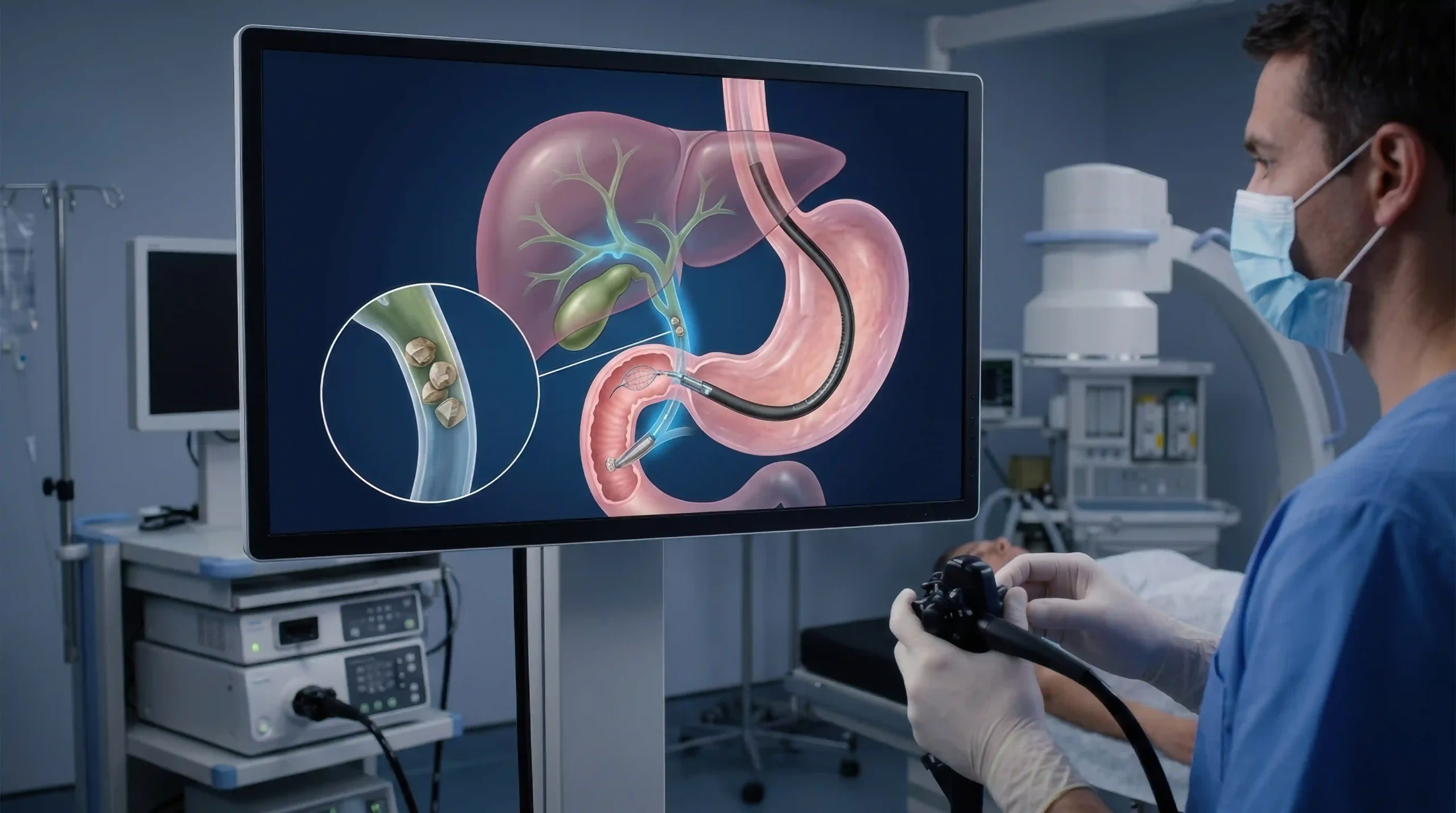
When stones migrate into the common bile duct, they can cause jaundice, infection, and pancreatitis. In these cases, ERCP (endoscopic retrograde cholangiopancreatography) is used to locate and remove the stones. Digestive & Liver Surgery also offers endoscopic ultrasound (EUS) to detect bile duct stones before determining the best course of action. ERCP does not remove the gallbladder — most patients will still need a laparoscopic cholecystectomy afterwards.
Non-surgical management is usually recommended only for those within a narrow group: those with small cholesterol stones in a functioning gallbladder, those unfit for surgery, or those with asymptomatic stones under monitoring. For most people, surgery remains the most effective and durable solution.
Not sure which option applies to your situation? The Digestive & Liver Surgery team will walk you through your options to help you decide. Get in touch to arrange an assessment.
When Should Gallstone Symptoms Be Treated as an Emergency?
Seek medical attention if you experience any of the following:
Symptom | What it may indicate |
Severe, continuous pain that does not ease after a few hours | Acute cholecystitis or bile duct obstruction |
Fever or chills alongside abdominal pain | Cholangitis (bile duct infection) |
Jaundice (yellowing of the skin or whites of the eyes) | Bile duct blockage or liver involvement |
Dark urine or pale, clay-coloured stools | Obstructed bile flow |
Nausea and vomiting that you cannot manage at home | Possible complication requiring clinical assessment |
All of these carry risks if left untreated.
Speak to a Gallstone Specialist in Singapore
If you have been diagnosed with gallstones and are weighing your gallbladder stone treatment options, the team at Digestive & Liver Surgery can help. Led by Senior Consultant Surgeons Dr Victor Lee Tswen Wen and Dr Tan Ek Khoon, the practice specialises in gallbladder, liver, and pancreatic surgery across four locations in Singapore.
Contact the team to book a consultation, or arrange a video consultation if you prefer to speak with a specialist from home.


