
Many digestive concerns begin subtly. You may notice a burning discomfort in your upper abdomen after meals, or a feeling that food isn’t going down as smoothly as it used to. At times, these sensations pass. But when they return more often or last longer than expected, it may be time to take a closer look.
As a specialist-focused (hepato-pancreato-biliary) HPB practice in Singapore, our team at Digestive & Liver Surgery perform gastroscopy to help identify the cause of ongoing digestive concerns and guide the next steps in your care.
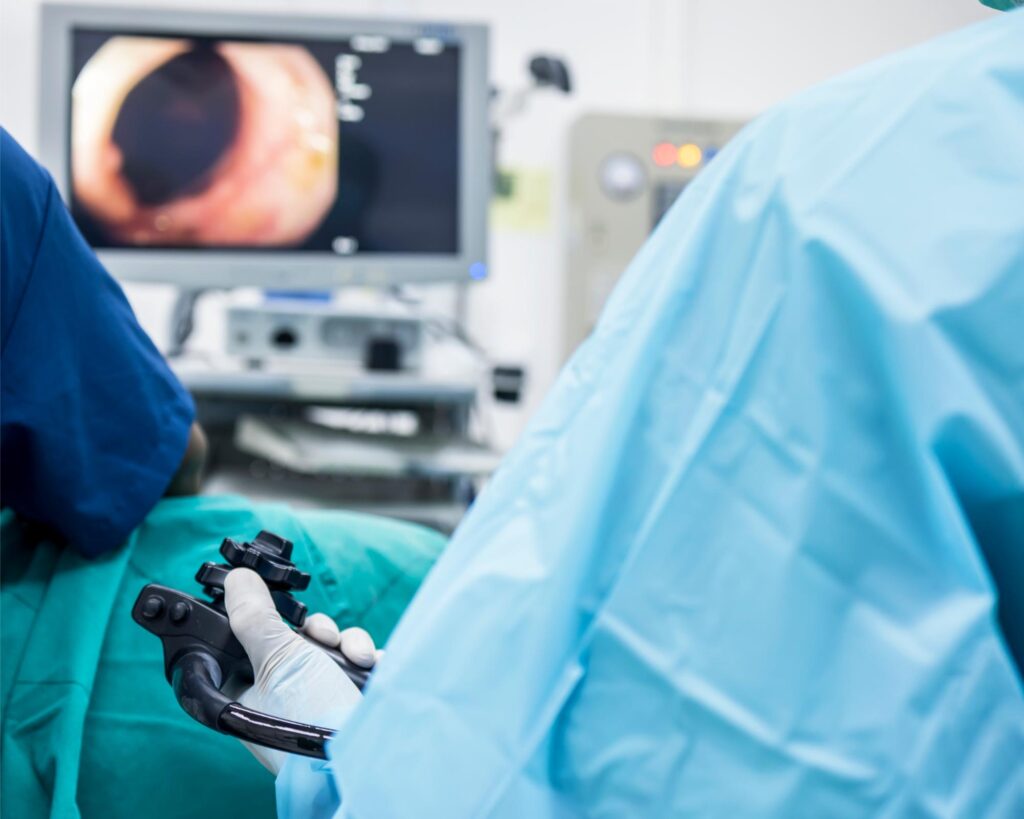
A gastroscopy is a medical examination that allows us to look directly at the lining of the upper digestive tract, including the:
Oesophagus (food pipe)
Stomach
First part of the small intestine (duodenum)
We do this using a thin, flexible tube with a small camera and light at the tip, called a gastroscope. It sends real-time images to a monitor, where we can inspect the internal surfaces of these organs in detail.
By viewing the digestive tract directly, gastroscopy provides clear visual information that cannot be obtained through external imaging or physical examination alone.
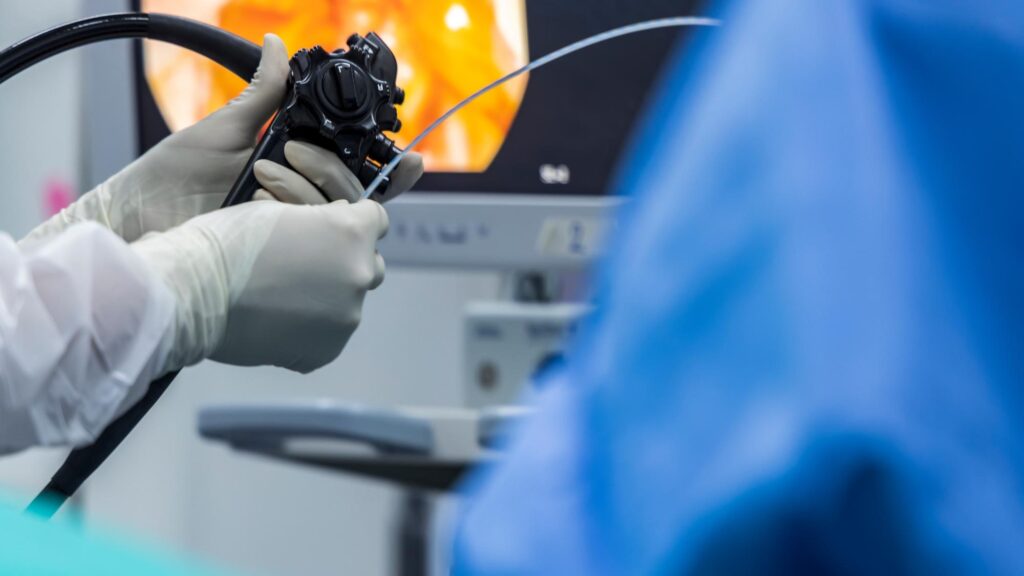
Sometimes symptoms alone do not provide enough information to understand what may be happening inside the digestive tract. We may recommend a gastroscopy to take a closer look and guide the next steps in care.
It may help to examine the stomach lining more closely if you:
A gastroscopy allows us to check for possible irritation, inflammation, or ulcers.
Some people notice that swallowing feels different from before. Food may seem to move down slowly, or you may feel as though something is getting stuck in your throat or chest when you eat.
When digestive symptoms continue without a clear explanation, further investigation may be needed. Gastroscopy can help us assess the oesophagus and stomach to determine whether conditions such as gastritis, stomach ulcers, or reflux-related irritation may be present.
Gastroscopy may also be used to carry out specific treatments within the digestive tract. For example, small growths can sometimes be removed, bleeding areas can be treated, or narrowed sections of the oesophagus can be rectified during the examination.
Symptoms not improving? Book a consultation at Digestive & Liver Surgery.
Many upper digestive symptoms – like upper abdominal pain or bloating – can sometimes be related to liver or gallbladder issues. Our specialists look at the “big picture” of your digestive health, not just the stomach lining.
Here’s what you can expect for a gastroscopy at our HPB-focused clinic in Singapore, Digestive & Liver Surgery.
At your consultation, we’ll review your medical history, current medications, and any existing health conditions to determine whether a gastroscopy is appropriate for your situation.
If the procedure is recommended, we may advise you to adjust certain medications beforehand, particularly blood thinners, as these can increase the risk of bleeding if tissue samples need to be taken during the examination.
You’ll also be asked to stop eating for at least six hours before the procedure so that your stomach is empty, though clear fluids may sometimes be allowed up to two hours before the examination.
An empty stomach allows the lining of the oesophagus and stomach to be examined more clearly.
If sedation is planned, we’ll advise you not to drive after the procedure and to arrange for someone to accompany you home.
You’ll typically lie on your side while the examination is performed. A local anaesthetic spray may be used to numb the throat. If sedation has been planned, it will be given through a vein before the procedure begins to help you stay relaxed throughout the examination.
A thin, flexible gastroscope is then gently passed through the mouth and guided into the upper digestive tract.
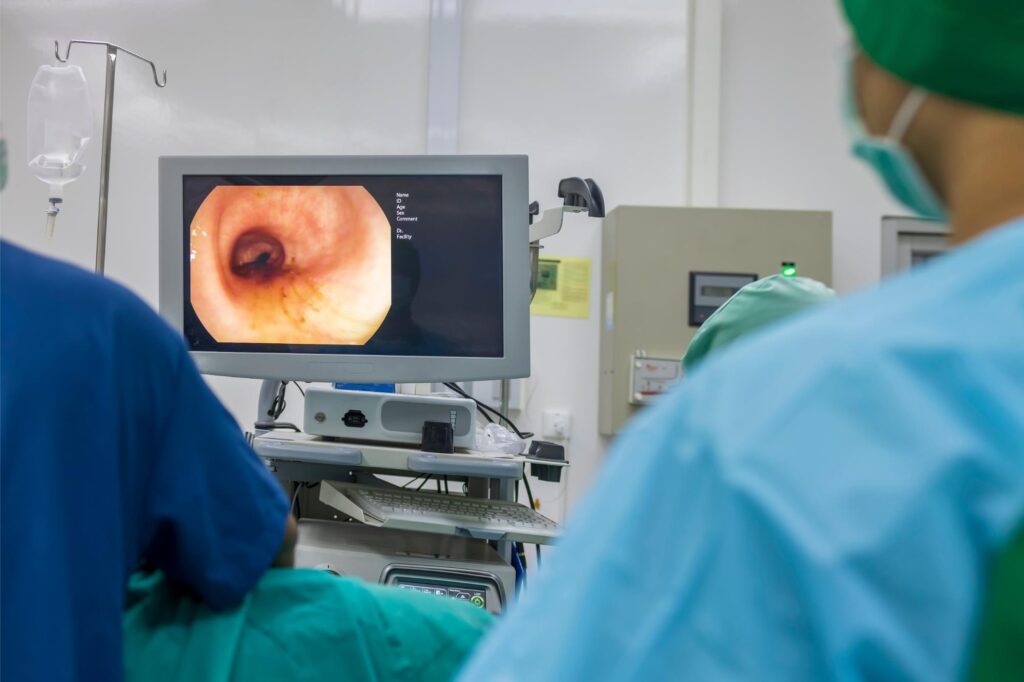
As the scope moves through the oesophagus, stomach, and the first part of the small intestine, we examine the lining of these areas on a monitor to check for inflammation, ulcers, growths, or other abnormalities.
The examination itself usually takes about five to ten minutes. If necessary, small tissue samples (biopsies) may be taken during the procedure for further laboratory analysis.
After the examination, you’ll be observed in a recovery area while the effects of sedation wear off. Monitoring may last between 30 and 60 minutes.
We’ll discuss the initial findings on the same day once you’re fully awake. If biopsies were taken, the lab results are usually available within several days. We’ll review them with you at a follow-up consultation or call.
Gastroscopy is widely performed in Singapore and generally straightforward. After the procedure, you may notice mild or temporary effects, which typically resolve on their own.
At Digestive & Liver Surgery, we believe in price transparency. According to the Ministry of Health (MOH), the cost of a diagnostic gastroscopy (upper GI endoscopy with or without biopsy) typically ranges from $1,784 to $2,362. This will include the procedure fee, facility charges, and surgeon’s fees, but exclude medication and anaesthetist’s charges if applicable, performed during the examination.
Medisave Claims: As an MOH-accredited clinic, a portion of your procedure cost may be claimable using Medisave.
We work with private insurers and IP (Integrated Shield Plans). Our listed price is an all-inclusive estimate which covers the procedure, facility fee and basic medications.
The final price you have to pay for a gastroscopy in Singapore can vary depending on several factors, such as:
Endoscopy is a general term for procedures that use a flexible camera to examine the digestive tract. Gastroscopy examines the upper digestive tract (oesophagus, stomach, and duodenum), while colonoscopy examines the lower digestive tract (colon and rectum).
Yes, gastroscopy is generally considered a safe and commonly performed procedure in Singapore.
Yes, we use it to detect abnormalities in the oesophagus, stomach, and upper small intestine. If suspicious areas are seen, we may take small tissue samples (biopsies) to test for cancer or other conditions.
Side effects are common, though mild and temporary, post-gastroscopy. From a sore throat and bloating to drowsiness due to sedation, these typically settle within a short time.
According to the MOH, a diagnostic gastroscopy can cost around $1,784 to $2,362. The final bill can vary depending on factors such as biopsies, sedation, and the healthcare facility where the procedure is performed.

Senior Consultant Surgeon

Senior Consultant Surgeon
Professional Care You Can trust

New DLS Group Office
We have opened a new administrative office to support our operations.
The address is:
545 Orchard Road
#10-09 Far East Shopping Centre
Singapore 238882
All medical services continue as usual at our four clinics.
Thank you!